I asked my agent to play my game. It handed back a documentary.
Claude played LLM Monster Hunter start to finish as a real player — then delivered a voiced, animated presentation of its own playthrough, built from screenshots it captured while playing. The presentation might be the bigger finding.
I’ve been building an AI-native monster-catching RPG for a while now — the code manages state and numbers, a language model does the storytelling and refereeing. Last month I built a whole test suite so the game could be playtested without anyone playing it, because a human at the keyboard is the slowest part of the project.
This week I did the opposite. I told Claude: wipe my save, turn image generation on, and play the game yourself, start to finish, like a real player. Fix any bugs you walk into. And when you’re done, make me a voiced presentation of your playthrough.
Watch the presentation it made. Twelve narrated sections, about eleven minutes. Every image in it is a real screenshot the agent captured while it was playing. I didn’t stage any of it, and neither did it.
What it played
It rolled a character I would never have rolled: Maren Holt, a lighthouse keeper who hasn’t blinked in twenty years, whose wish is to bring back the ship the sea took — crew and all — and finally let her lamp go dark.
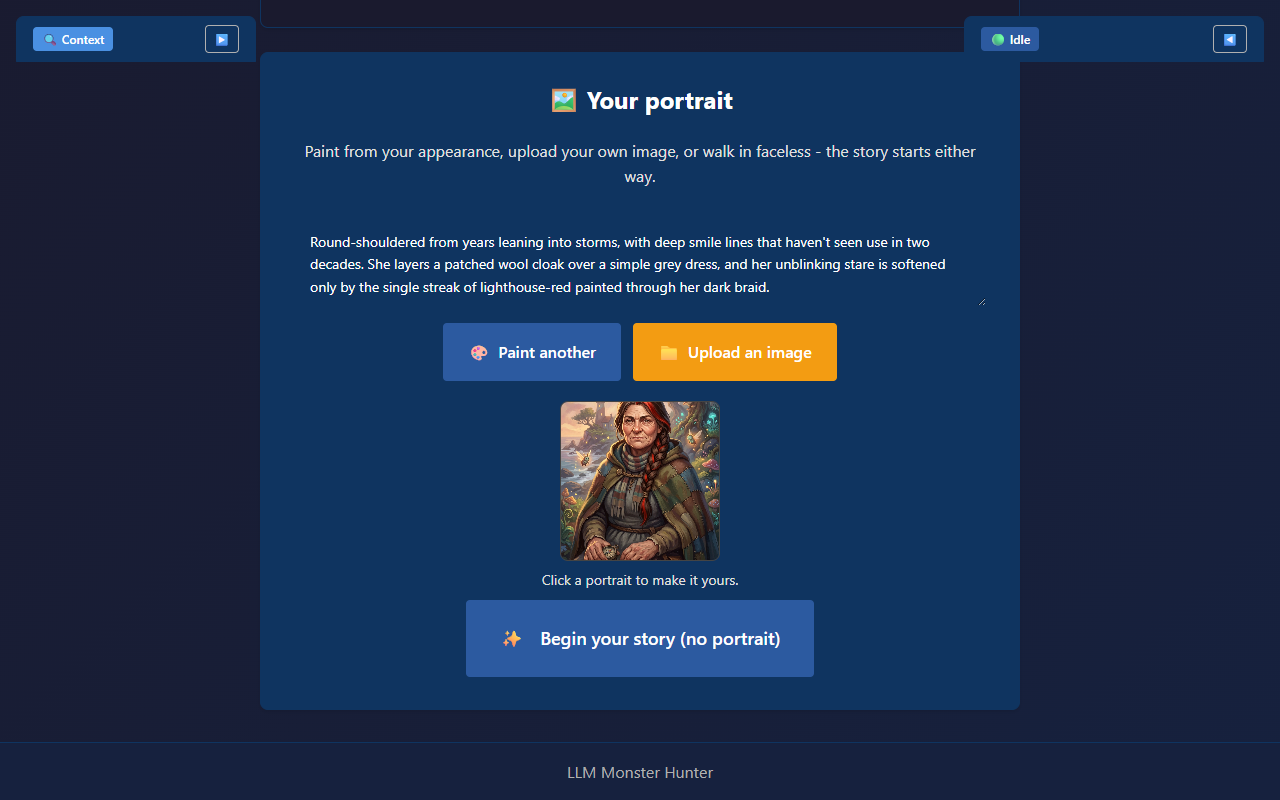
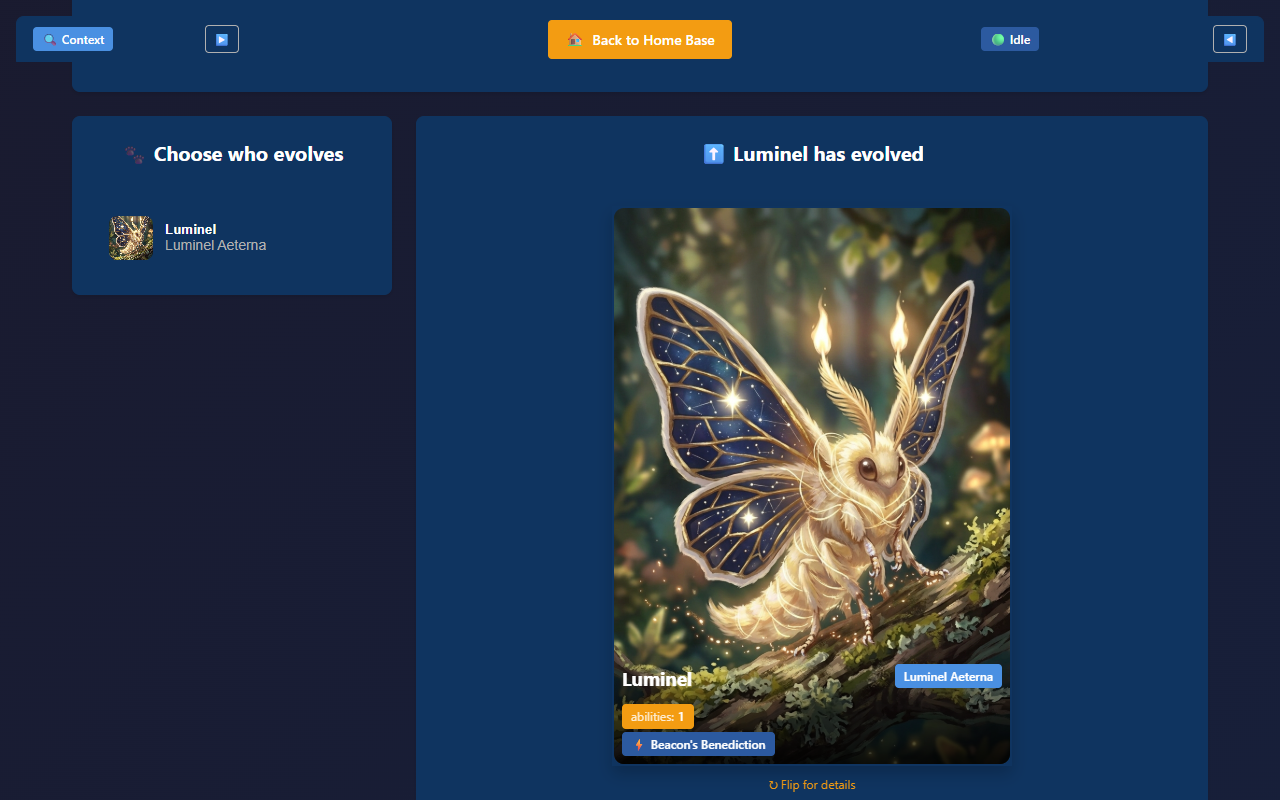
Then it played her in character for two full expeditions. It recruited a vain moth-fey by promising to remember it. It won a battle without a killing blow by talking an exhausted monster to sleep. It evolved its companion at the altar with a whispered direction — “let the performer become a keeper of light” — and the art regeneration kept the same creature, same pose, and turned its wings into star charts.
Halfway through, Windows forced a restart and killed everything mid-run. The game’s crash handling turned the lost expedition into fiction — “the last expedition never came home, and the story carries the scar” — which the agent then folded into its presentation as a chapter. Even the disaster became part of the story.
It also did the job I actually assigned: it found five real bugs by walking into them (the worst one silently ate any message over 500 characters — its best in-character speech died in that box), fixed all five, wrote a regression test, ran my full CI gauntlet, and opened the PR. Its honest review: the game is fair, the story is the strongest system, and the referee is too kind — it never once said no to a good speech. That last note is now on my tuning list.
Why the presentation is the actual finding
Here’s the thing I keep chewing on. The playthrough was good. The presentation of the playthrough changed how I work.
I manage a lot of agent sessions in parallel, and the tax I pay all day is context switching: every session that finishes hands me its fiftieth markdown report of the day, and my brain has to cold-boot the entire project to figure out what the wall of text means. I skim, I miss things, I lose the thread.
This was different in kind. Because the agent built the presentation while acting — it captured every screenshot in the moment, as part of doing the work — the deliverable is one coherent story in the order it actually happened, with the evidence inline. If I had asked for a presentation retroactively, none of those assets would exist; you can’t screenshot a moment that’s already gone. The narration means I don’t even have to read. I pressed play, watched eleven minutes, and had full context on a two-hour session — what worked, what broke, what it fixed, what it thought — without cold-booting anything.
Pair the action with the presentation, and the long-horizon task stops being a wall of text and starts being something you can absorb at the end of the day with a coffee. I think this is just how agent work should be reported now, and I’m going to start asking for it deliberately: don’t tell me what you did, show me the story of what you did, with the receipts you collected while doing it.
The narration is ElevenLabs again (same pipeline as the Grind & Grimoire voice lines — that API keeps earning its keep). The player is a few hundred lines of vanilla JS the agent wrote to Ken Burns its own screenshots in sync with the audio.
The agent also screen-recorded the entire 1h53m session, which turned out to be useful exactly once — reviewing it settled a bug question its screenshots couldn’t (an animation it thought never played had simply finished between captures) — and then I deleted it. The presentation is the artifact worth keeping. It ends with a line I didn’t write and can’t stop thinking about — its verdict on the game: “it is the only game I have played where mercy is a build.”