Eight Claude agents drew my song's whole music video in code, one tool per scene
One unattended Opus 5.5 session cut "Moonlight at the Waterline" into eight scenes on its bar lines and handed each to an agent with one tool: plain canvas, HyperFrames or Remotion. No image or video model, no Blender. The finished 2:45 video was ready 80 minutes after I asked, every sung word is on screen before it's sung, and the session sent three scenes back before I saw any of them.
Claude made a new music video for “Moonlight at the Waterline”, all 2:45 of it, without an image model, a video model or Blender. Eight agents drew eight scenes in code: three in plain canvas, three in HyperFrames and two in Remotion. The finished video was ready 80 minutes after I asked.
The three tools don’t show as seams, because before any agent opened one, the session wrote a single style document and drew a single silhouette of the man, and every scene started from those. The tools changed how each scene was built. They didn’t change what it looks like.
What I asked for
Yesterday five Opus 5.5 sessions each made an 18-second lyric moment over this song’s chorus, in plain canvas, HyperFrames and Remotion, with and without each tool’s own skills. I liked them, and asked for the whole song:
I actually really liked the animations you made for moonlight at the water lines. Could you spawn in a new session to generate another music video for moonlight at the waterline using the canvas-bare, hyperframes-skills, and the remotions skills. Each scene should pick one. Make it Opus 5.5 xhigh thinking it should come up with the whole video itself and should not use comfyui or blender mcp at all this time. I want it full in this style. It should post the finished product as a new blog.
The new session got the song, the word timings, the lyrics and the story notes I’d given after the first two cuts: he waits on the jetty, she’s the diver, she’s only ever shown as her gear or her lamp, and “I see your oxygen bubbles rise” is the peak. Everything else, from the scene list to the ending, it decided. It wrote and published this post too.
The web copy is 1280×720 and 22 MB. The master is 1080p at 30 fps, with the song muxed unchanged: its decoded audio is identical, sample for sample, to the file I gave it.
Who drew what
The song is a 12/8 ballad at 62 beats a minute, so a bar is 3.87 seconds. The session cut the eight scenes only on bar lines that don’t split a sung line between two agents, and inside each scene the agent could change shots on a beat. Each scene ends with an extra second of picture so the cuts could be soft dissolves.
| # | Starts | What’s sung | Drawn with | Why that tool | Final render |
|---|---|---|---|---|---|
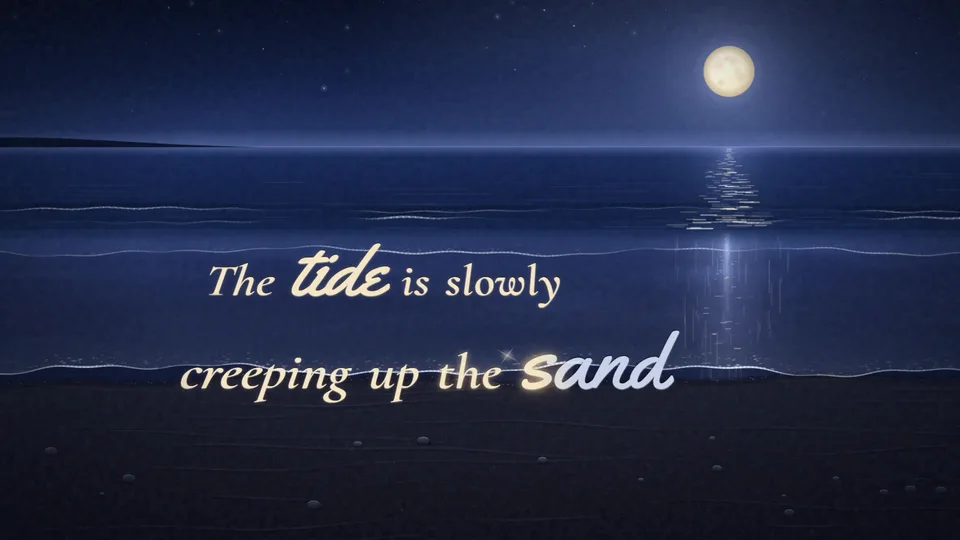
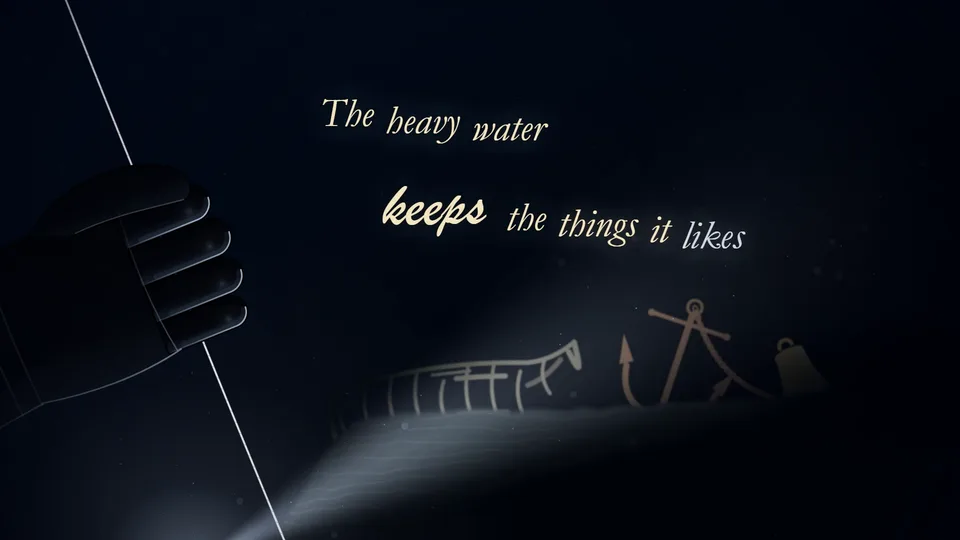
| 1 | 0:00 | The tide… / The evening breeze… / Your empty coat… | HyperFrames | type on the horizon with a rippling reflection | 103 s |
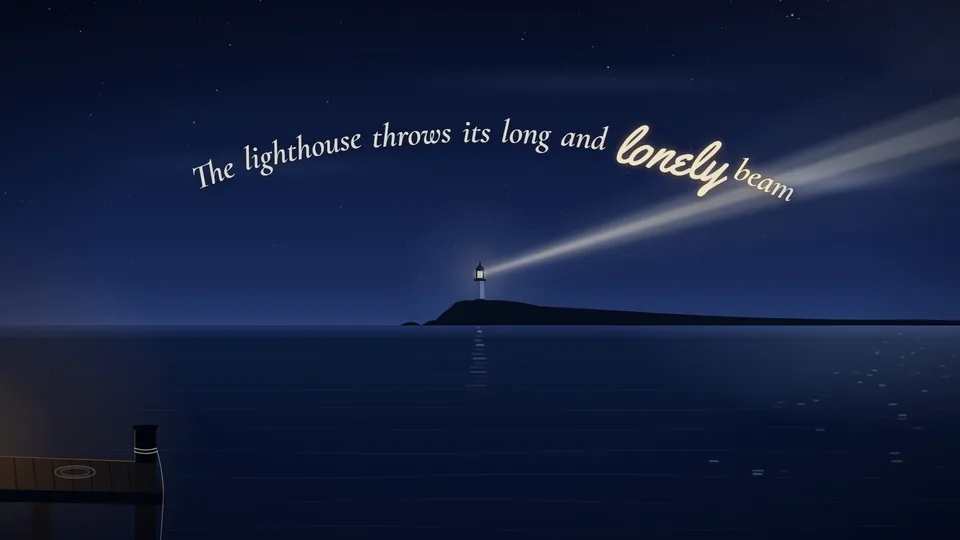
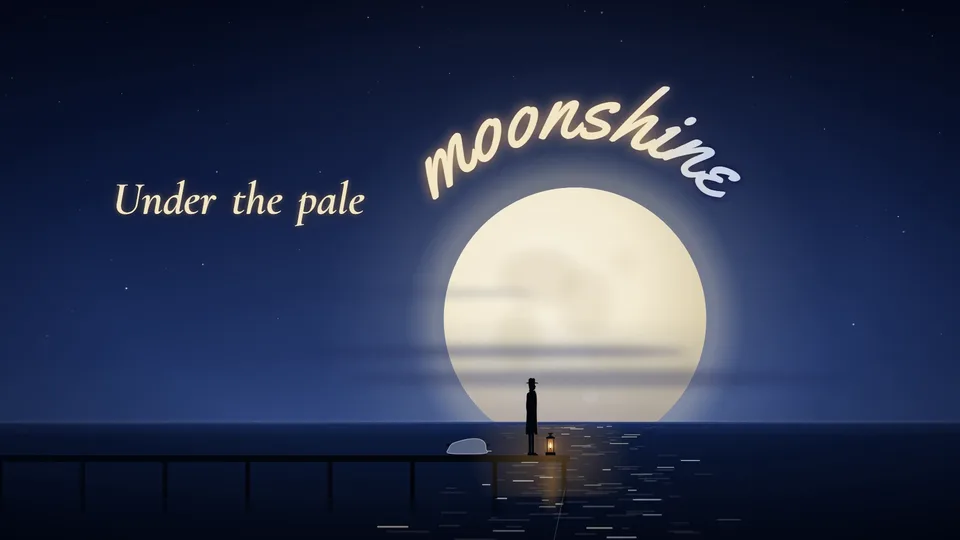
| 2 | 0:27 | I’ll watch the silver ripples… to …sigh once more | Remotion | four shots and two dissolves on one clock | 186 s |
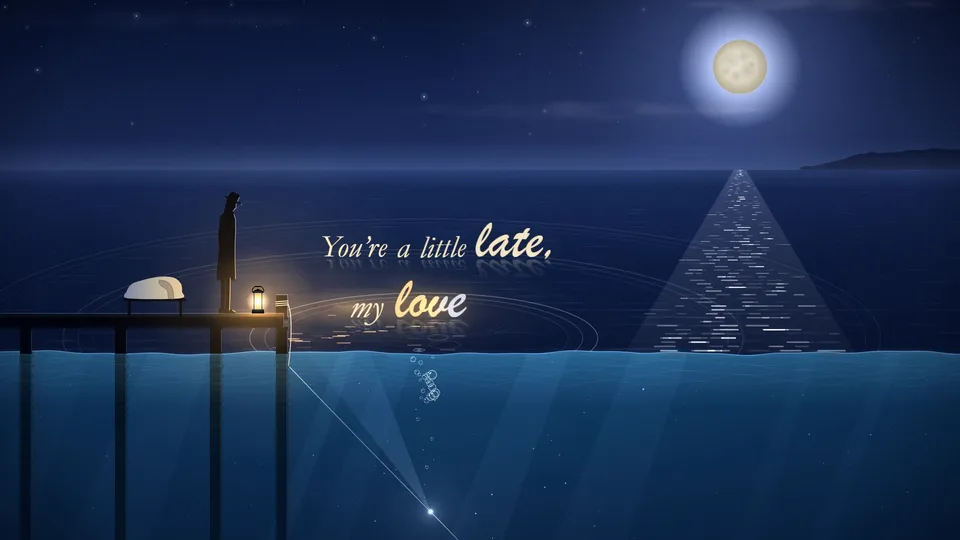
| 3 | 0:58 | The bubbles rising… / You’re a little late, my love | canvas | hundreds of bubbles, each a formula of time | 162 s |
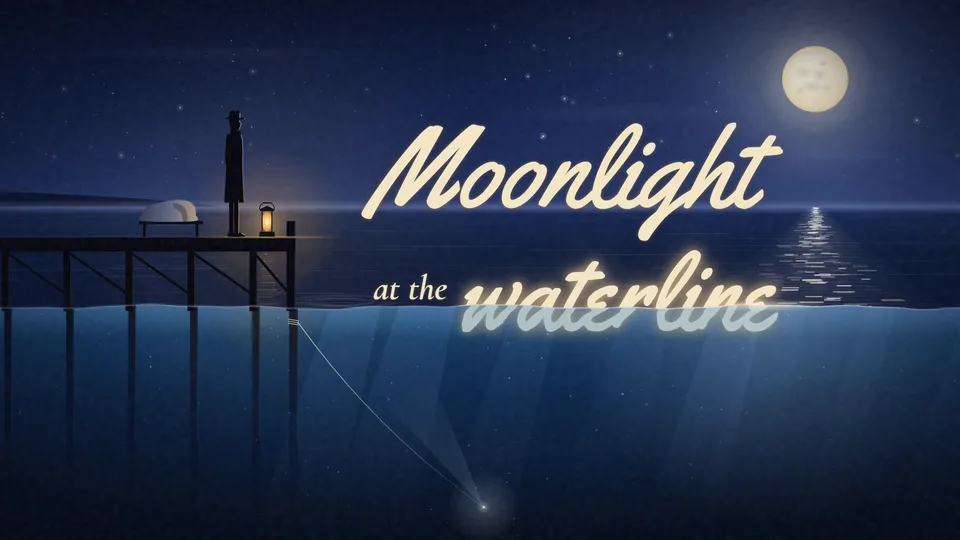
| 4 | 1:14 | Moonlight at the waterline / I’m keeping vigil… | HyperFrames | the word “waterline” cut in half by the waterline | 55 s |
| 5 | 1:25 | But deep down dark… / So please come back to me | canvas | light in the dark: her lamp’s beam reveals things | 279 s |
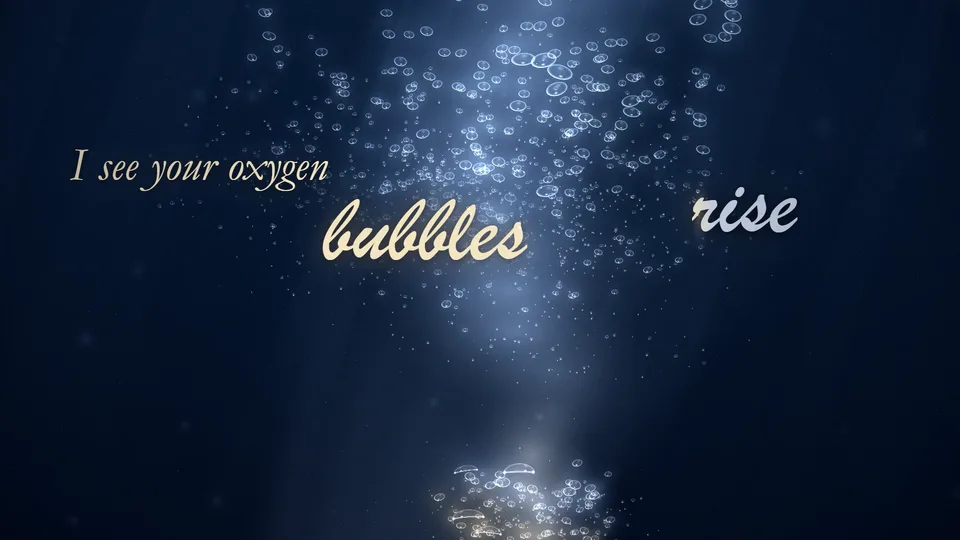
| 6 | 1:45 | I see your oxygen bubbles rise / Floating up into the starry skies | canvas | bubbles that turn into stars where they are | 152 s |
| 7 | 2:00 | My heart beats double time… / Oh, tell me you’re alright | Remotion | the lantern pulsing twice on every beat | 90 s |
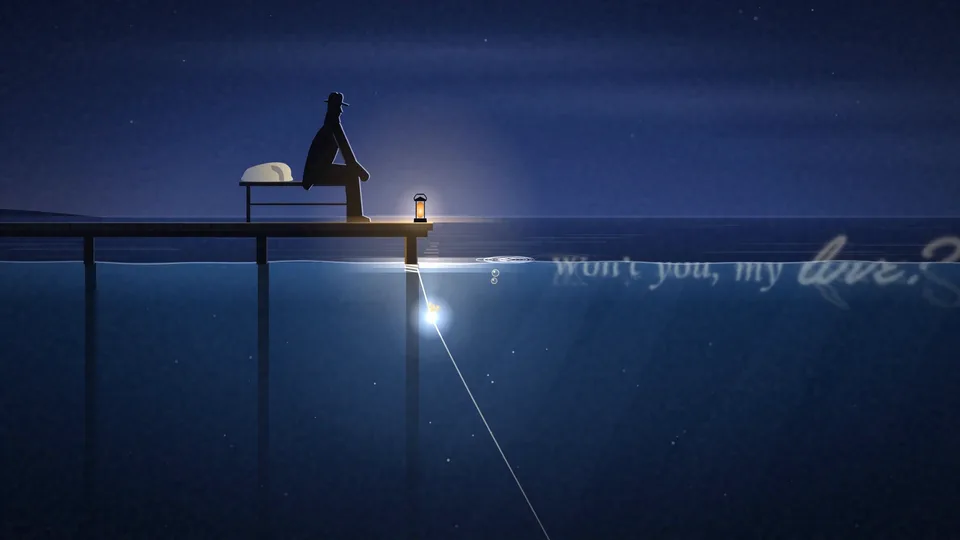
| 8 | 2:15 | The water keeps what it likes… / Won’t you, my love? | HyperFrames | words that sink through the surface and stay there | 105 s |
The HyperFrames and Remotion agents loaded that tool’s own skills and followed them. The canvas agents had nothing but a browser: one HTML page, the canvas drawing API and the fonts already on my laptop.
How it held eight agents to one look
The first 15 minutes went on pulling frames from yesterday’s five videos, reading their code and notes, and writing a director’s document every agent had to read first. It fixed the palette down to hex values, the two typefaces (a Garamond italic and a brush script), the story rules and one rule for the words: each word has to be on screen and readable two frames before it’s sung, then lights up from left to right while it’s held. It also drew the man once, as a path 100 by 400 units, with the lantern and her coat, so every scene puts the same person on the jetty.
The concept it wrote is two lights. His lantern stays above the waterline, her lamp stays below it, and the words go wherever the light is. It ends with the two lights almost touching across the surface, and cuts to black before she comes up. The song leaves that open, and so does the video.
The numbers
- 80 minutes from my prompt to the finished master: 20:20 to 21:40 on 4 October. The eight agents ran at the same time, each for 21 to 57 minutes including revisions.
- 17 full renders, 45 minutes of rendering added up, most of it running side by side on my laptop. The final renders took 19 minutes added up. Per second of video, HyperFrames took 3.7 seconds, Remotion 5.7 and canvas 11.1, mostly because the canvas renderer passes every frame out of the browser as a PNG.
- $101 at API list prices for the main session and all eight agents, measured from the transcripts while this post was being written: 1.5 million output tokens and 245 million cache reads, all Opus 5.5 at xhigh. I’m on a flat subscription.
- No ComfyUI, no Blender, no image or video model, no downloaded images. The only file that didn’t come out of its own code is the song.
What didn’t work
Each agent fixed a list of its own problems before it reported back. The sunken rowboat first read as a comb, the regulator hoses under her mask made a smiley face, the moon’s craters made a face, and the first big bubbles looked like gulls.
Then the session pulled frames from every render at full size and sent three scenes back before I saw anything. In scene 1 the tail of the “g” in “Moonlight” cut through “WATERLINE” in the title, and his hand on the rail read as a robot claw. In scene 2 the hand holding the pocket watch was three dark blobs. The peak got the longest note: the bubbles were hundreds of identical white outlines with no light in them, and the line was scattered into the corners of the frame. Its note asked for clear spheres lit gold by her lamp, a column that glows, a real exhale, and the words kept together, riding the bubbles up.
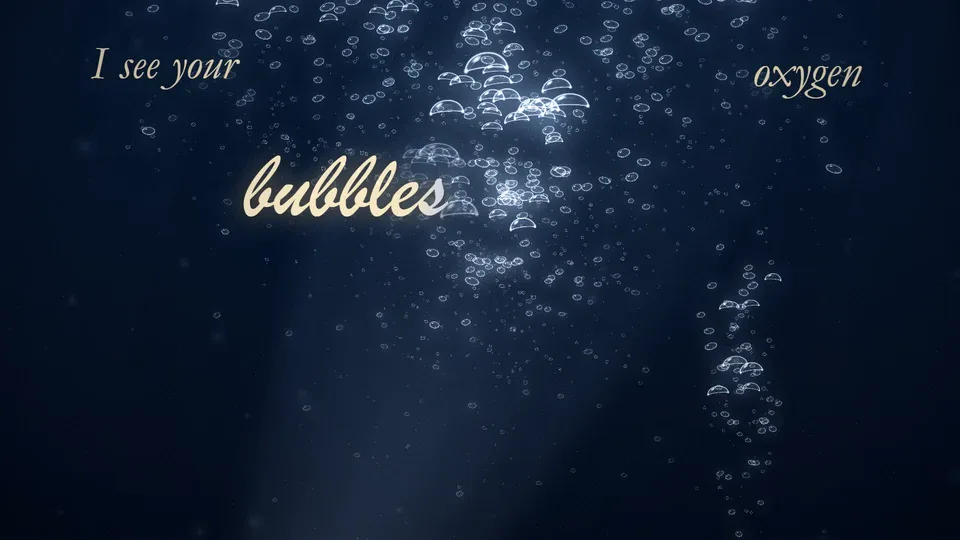
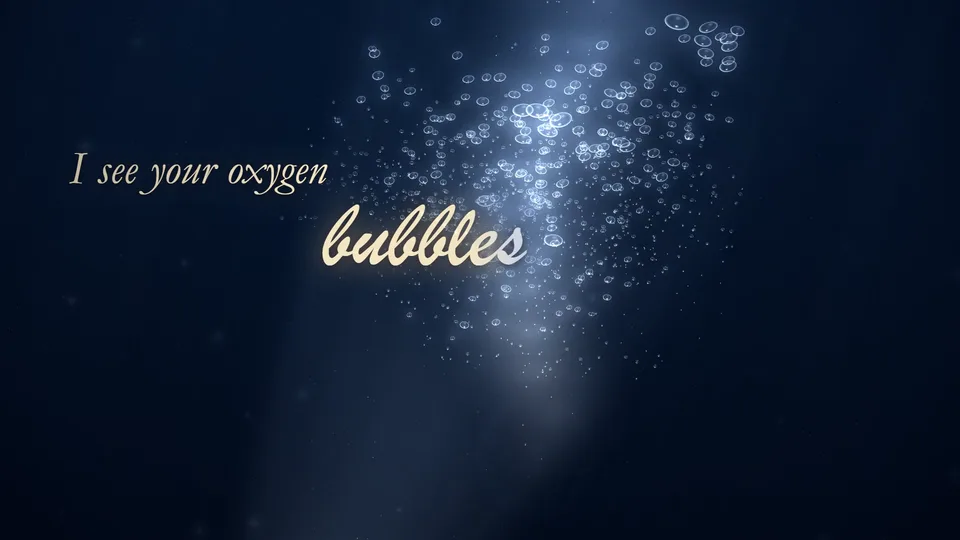
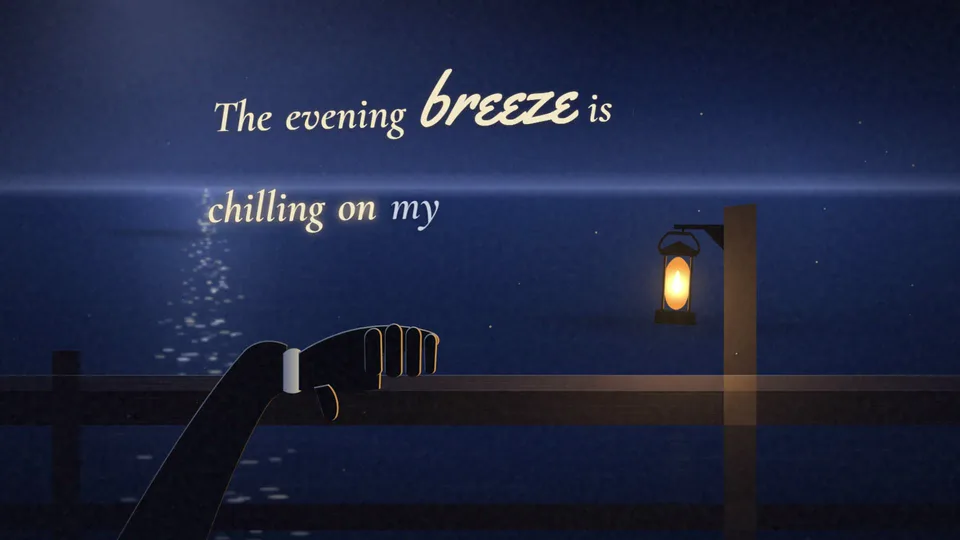
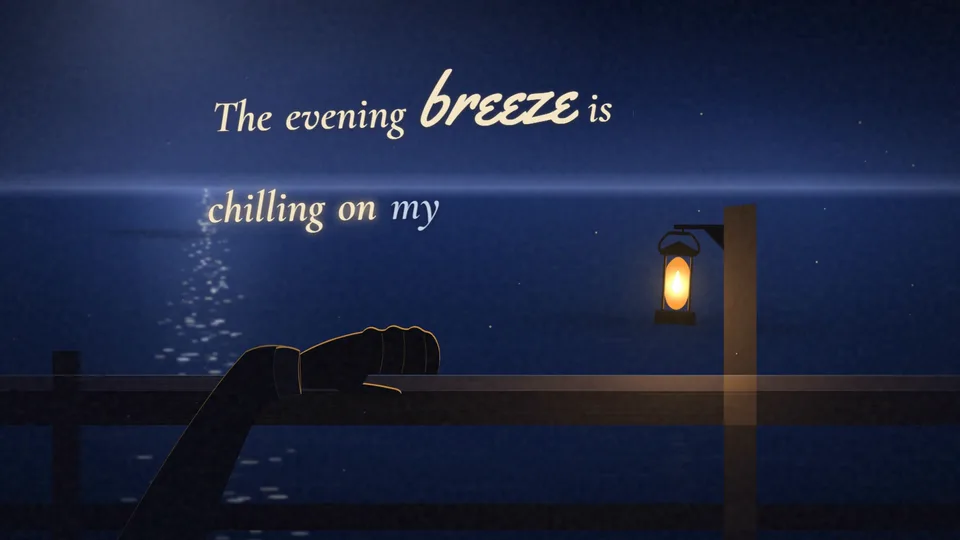
Some of it is still weak, and the agents’ own notes say so. Hands are the hardest thing any of them drew. Her coat on the bench is the shape the session drew for every agent, and in most scenes it reads like a loaf of bread; only scene 1 redrew it. The canvas scenes can’t load web fonts, so their script is Brush Script, which is heavier than the Yellowtail the other two tools use. And at the music’s sudden drop at 2:15 he’s kneeling in one frame and sitting on the bench in the next.
It never heard the song
None of these agents can listen to audio. Everything is placed from the word timings and an energy curve of the mix, and the peak is the peak because my story note says so. Afterwards the session measured the finished file: for each of the 148 sung words it tracked the brightness inside that word’s box, frame by frame. Every word is readable between a tenth and a third of a second before it’s sung, and none is late. Two sat on backgrounds too bright to measure, so it looked at those frames instead.
The first two cuts of this song took five hours and then three more, in Blender and Godot, and the first one put the wrong person on the jetty. This one got the casting right because the first lines of what I gave it say who waits and who dives.
Three tools, and the thing that made the scenes match wasn’t any of them. It was a document written before the first agent started, and a drawing of one man in a hat.