A new image model went onto my 8 GB laptop overnight. Its long pictures hold up to 8:1, not 12:1
I asked for MOSS-Image, a model released days earlier, to be installed next to Qwen-Image 2.1 while several other agents were busy on the same laptop. One Claude agent did it in two sittings, kept everything else working, and measured it: 30 to 39 seconds a picture, or about 7 with a speed LoRA, drawn boxes obeyed, and a panorama idea of mine that works at 8:1 and falls apart past it.
At 22:46 on 19 October, in the middle of a session where agents were building the next episode of my series, I asked for one more thing: get MOSS-Image SFT, an image model that had just come out, running in my ComfyUI next to Qwen-Image 2.1.
One Claude agent (Opus 5.5) did it by 00:21, in two sittings around the other agents’ GPU work, and the update it needed broke nothing that was already installed. Its measurements are below: a plain picture takes 30 to 39 seconds, about 7 with a speed LoRA, drawn layout boxes are obeyed, and the long-picture idea I had for it works at 8:1 and fails past that.
This is one night’s test, three prompts and two seeds. Nothing here puts MOSS against Qwen on the same prompt; that test hasn’t been run.
What I asked for
My request, in my words: “It looks like you can generate images in crazy aspect ratios so you can do things like ask it to make a really long image, and then cut that image into smaller images and upscale and denoise them again with another model and then stitch them back together and finally have a video of it scrolling down or across it at full screen size.”
I also told it the model might need a ComfyUI update, “so pick when you ask this to happen carefully”. Several other agents were working on the same laptop and sharing its one 8 GB GPU. A few minutes later I added a speed LoRA I’d seen, an 8-step DMD distillation by lodestones, and asked for both to be tested on the same prompts.
How it went in
The agent split the job so it wouldn’t touch the running ComfyUI.
- First sitting, 22:47 to 22:57, no GPU. It looked up what ComfyUI needed for the model, found that the release then current (0.42.1) lacked one fix it depends on, wrote an install plan, and downloaded 14.19 GB in about five minutes: the 5B model in int8 (5.41 GB), a quantised Qwen3.5-9B text encoder (7.34 GB), a small FLUX.2 VAE (0.25 GB) and the LoRA (1.19 GB). The download took the C: drive to 24.1 GiB free, under my own 30 GB rule; another agent cleared space before the next step.
- Second sitting, 23:33 to 00:21, with a 41-minute GPU reservation. It tagged the current ComfyUI for rollback, ran a smoke test, updated from 0.37.0 to the development branch, and ran the smoke test again: Qwen-Image 2.1 gave a pixel-identical picture, and the video model (MiniMax-H3), the segmenter (SAM 3.1) and the music model (YuE2) all ran at the same speed. Then it built five workflows and the test renders shown here.
The agent made 141 requests and moved 38.4 million tokens, nearly all of them re-reading its own context. MOSS is Apache-2.0, which Qwen-Image 2.1 is not, so its pictures could be used commercially; this site sells nothing, but it’s why I’d keep it even if Qwen stays better.
Plain against the speed LoRA
Same prompt, same seed, 1024×1024. Plain is 25 steps; the LoRA version is 8 steps at strength 0.7. The seconds are from ComfyUI with the model already loaded.
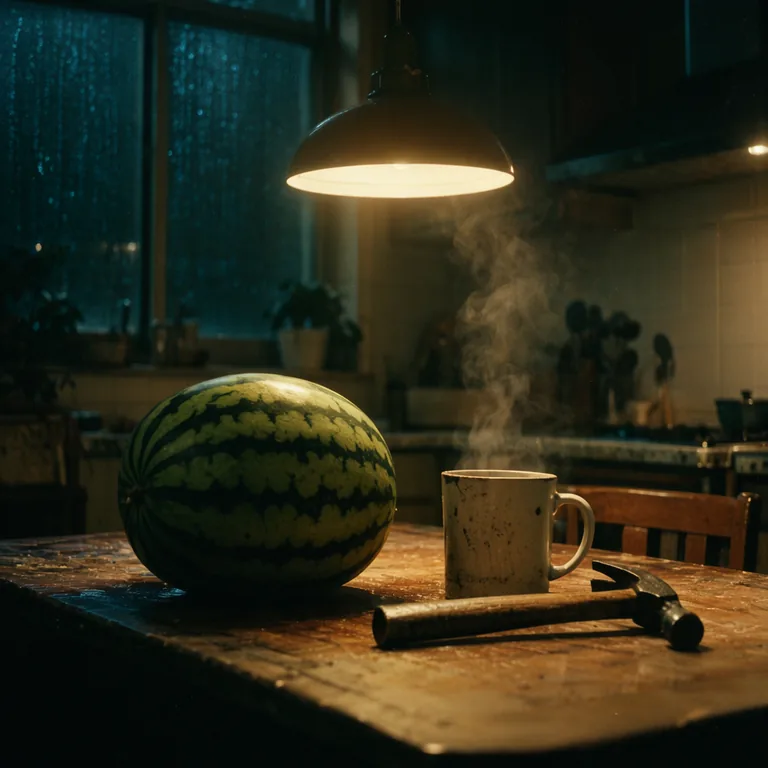
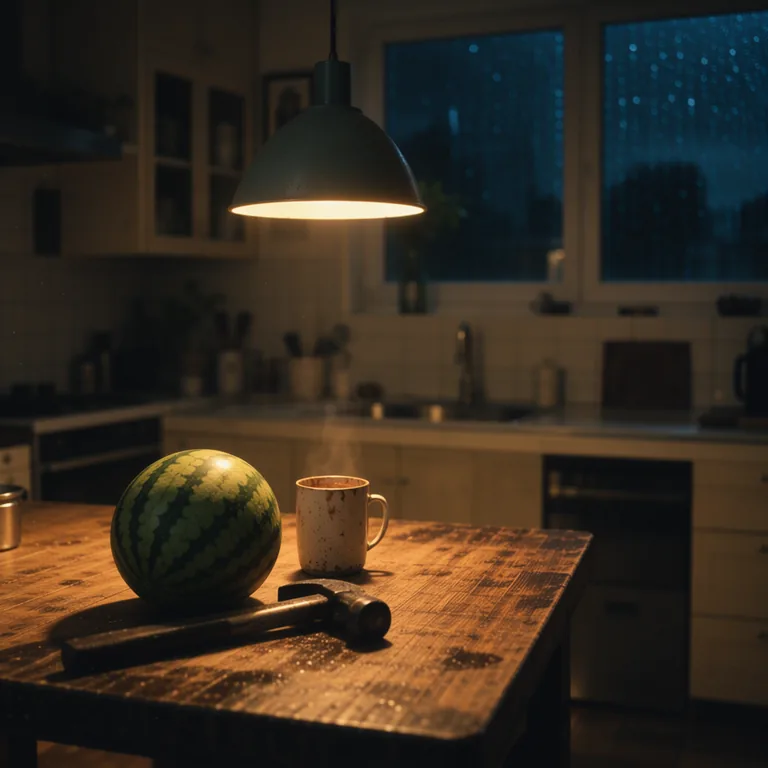
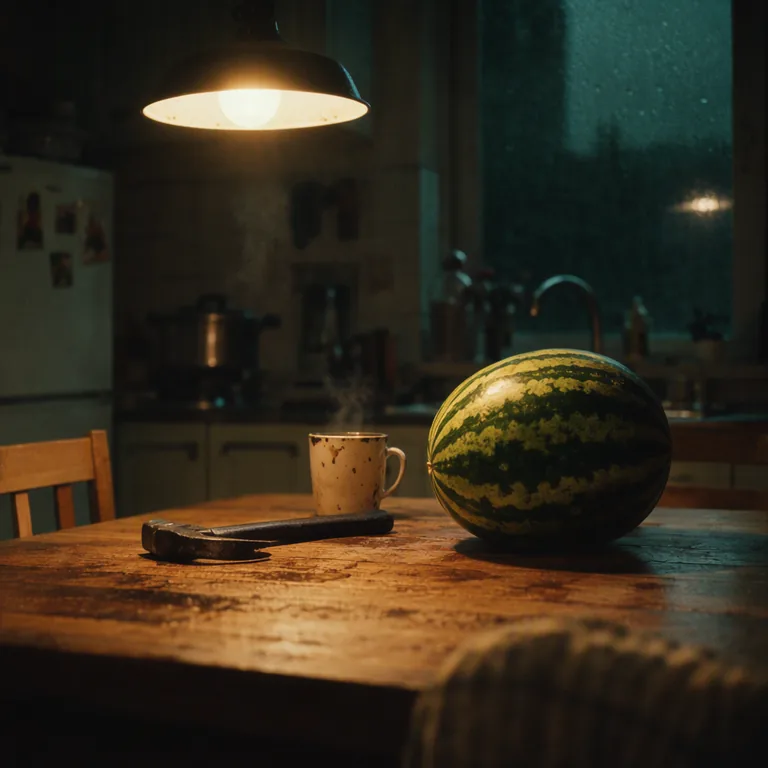
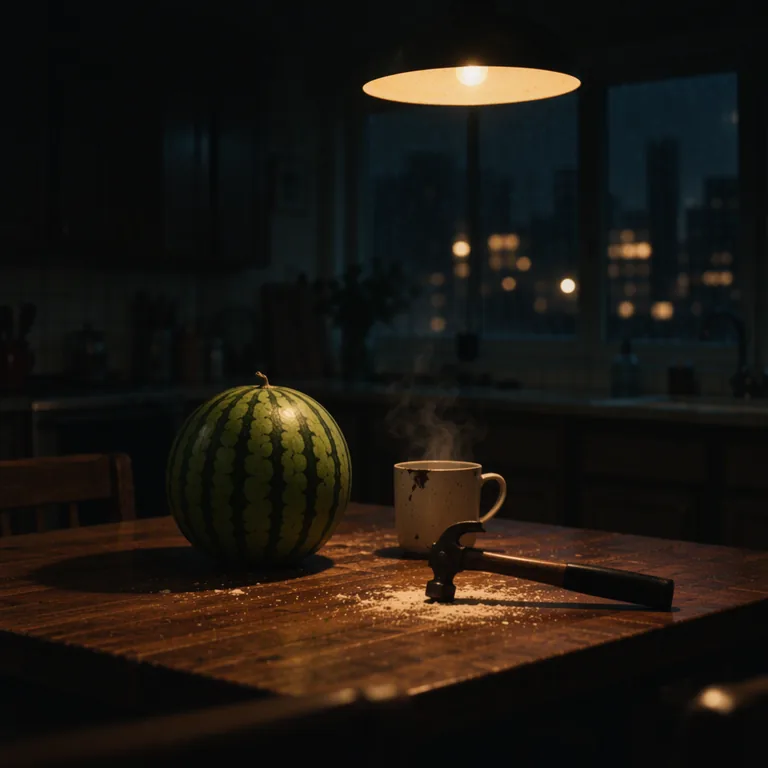





The LoRA is about five times faster. The agent’s note on the difference was a little flatter light and less fine texture, and the one slip is in the last cell. It also ran the official default (50 steps, CFG 3): 76.2 seconds, and it couldn’t see a difference, so the workflow stays at 25. With the LoRA set to strength 0 the picture came out hazy, which is how it checked the LoRA was doing anything at all.
Boxes and grids
MOSS takes a layout as well as a sentence: a JSON list of boxes, each with what goes in it, and it draws each thing inside its box. The left side of each slider is the layout as drawn, the right side what came back.
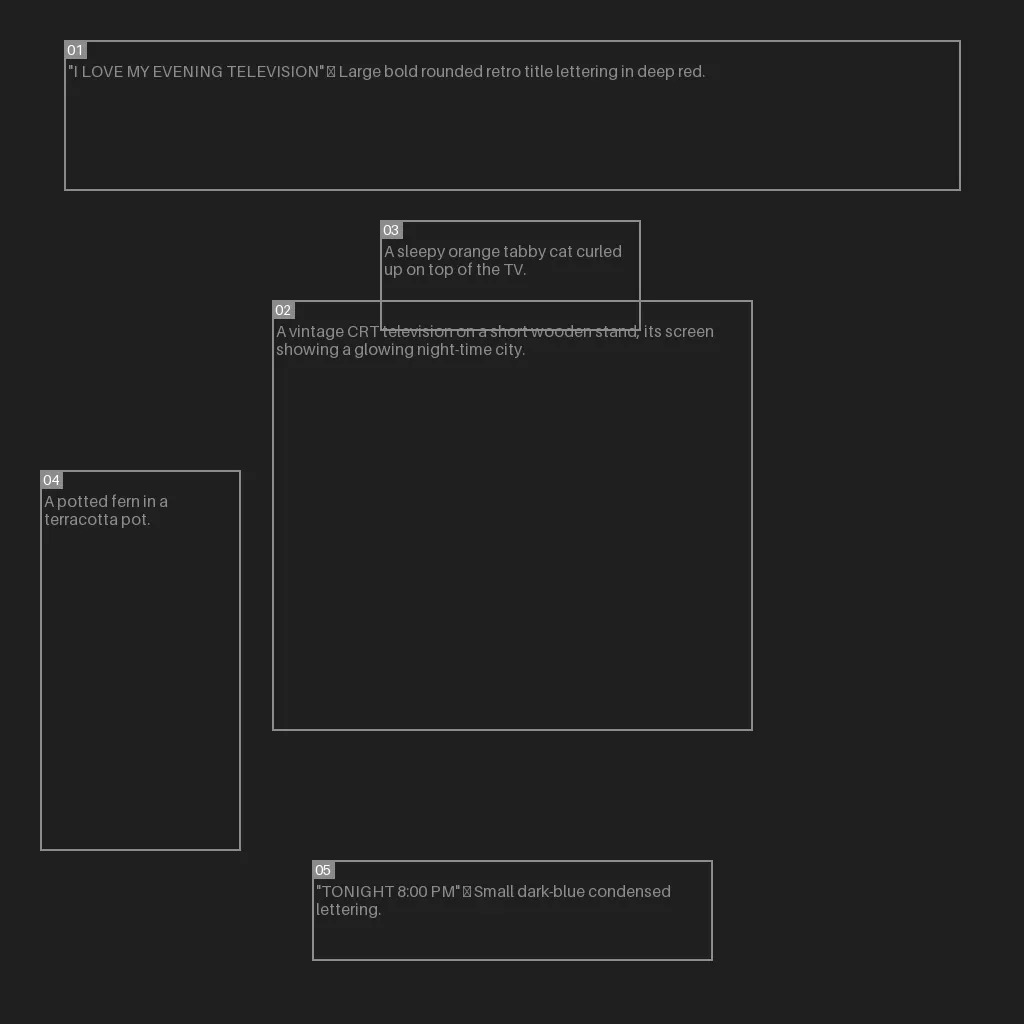

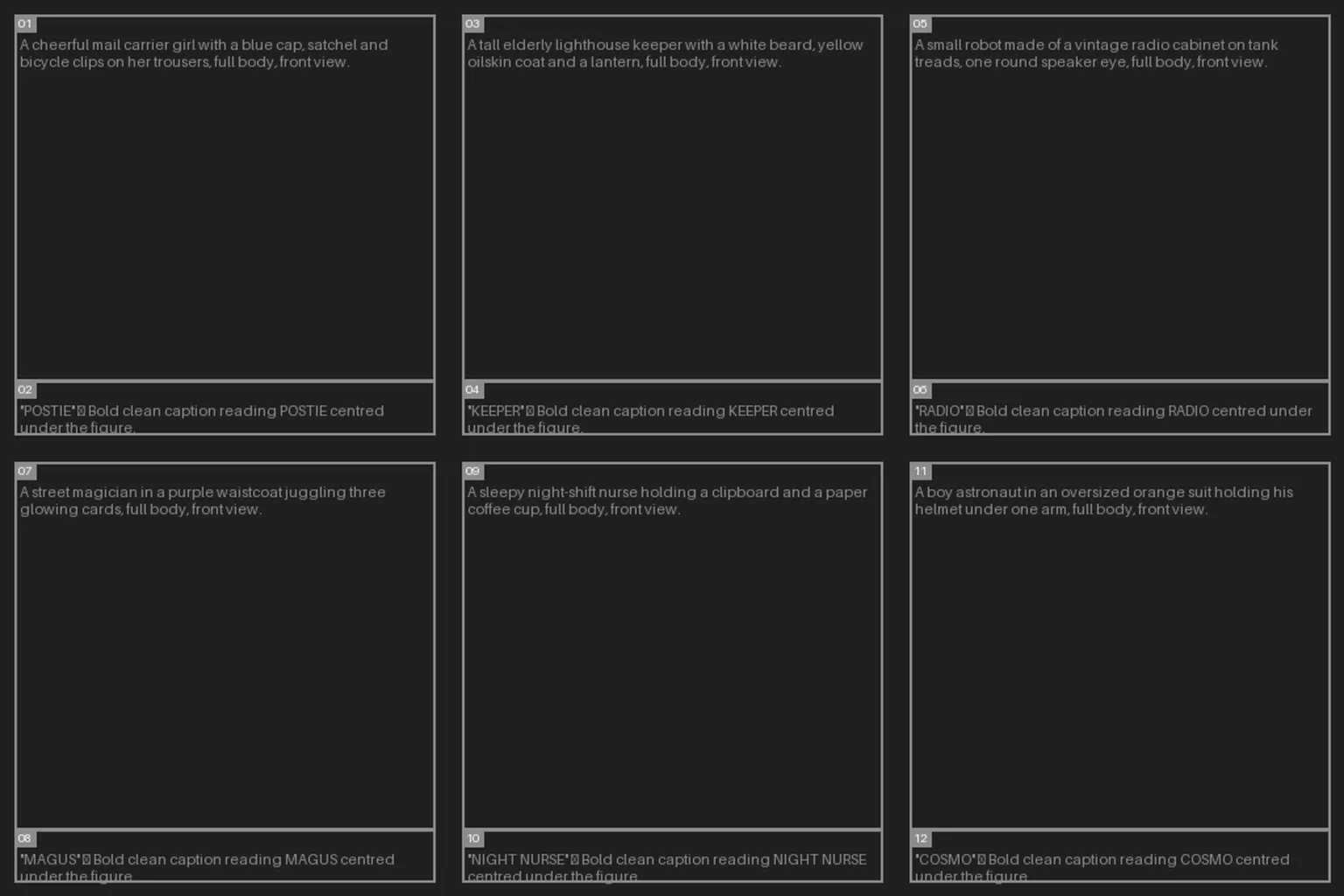
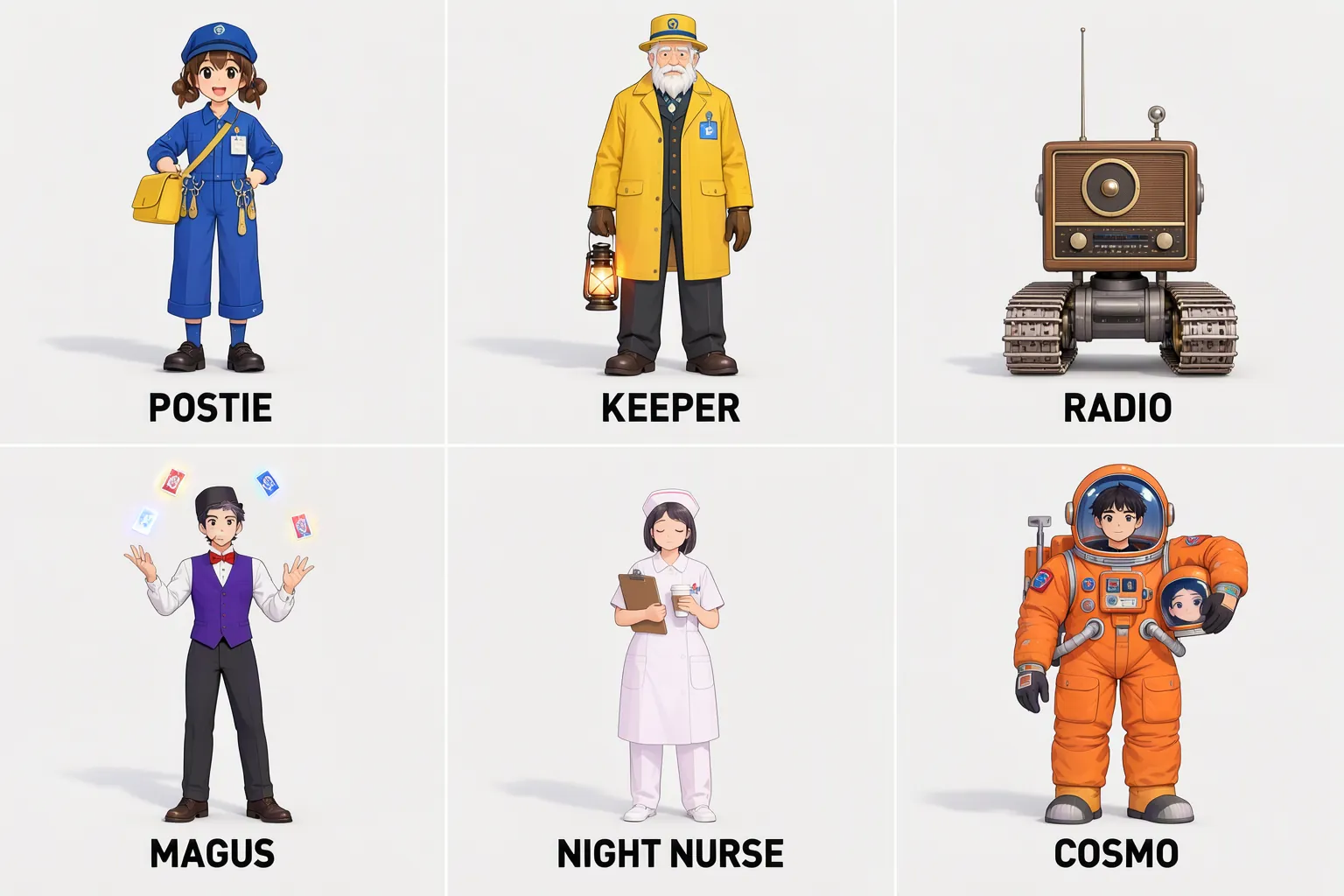
That second one is the part I’d use most. Six different characters in one consistent style, one per cell, named correctly, is a lineup sheet in a single render, and the agent’s note says the trick was describing each character only inside its own box.
The long picture
Here is my idea, built. The prompt asked for one street read left to right: night market, tram stop with a girl in a yellow raincoat, bookshop, canal bridge, hillside under the first stars. The model drew it as one 4096×512 strip, which was upscaled to 8192×1024, cut into ten overlapping 1024×1024 tiles, each redrawn lightly with the speed LoRA, and stitched back with feathered edges. Drag it, or press Glide.
It is one street with no visible seams. It is not quite the street I asked for: this seed put the girl’s tram stop at the far right end, after the bridge, and the hillside is houses rather than open ground. The two test strips further down kept the order.


The scroll video I asked for is a script that pans across the finished picture with ffmpeg on the CPU: 30 seconds of 1080p in about 30 seconds. This copy is cut down to 720p.
Then it tried to go longer, and this is where it stops working. At 12:1 the street starts repeating the same storefronts, and at 4.7 megapixels it goes muddy. Switch between the strips below; the frame stays at the same point of the street.




The agent’s rule from this, now in my ComfyUI notes: stay near 8:1 and about 2 megapixels, write the prompt as a left-to-right list of places, and for anything longer stitch several 8:1 strips instead of asking for one long one.
What’s still open
Whether MOSS replaces Qwen-Image 2.1 is the question I started with, and this night doesn’t answer it. What it shows is narrower: the model fits on an 8 GB card beside everything else, the speed LoRA makes it cheap enough to draft with, and boxes give me a kind of control I didn’t have. By morning the agents building the episode had already used it for dozens of stills.
The thing worth copying is the split, not the model. The agent did everything that didn’t need the GPU first, waited for a gap, and proved the old models still worked before calling the new one installed. That’s why I could ask for it in the middle of someone else’s render night.