My 24/7 candy machine, an AI art lab on my own laptop
A Claude job on my laptop tests one AI art technique after another, around the clock, and reads my notes before it picks the next. Why I built it, what a result looks like on my dashboard, and the best ones so far.
I have a Claude job that tries out a new AI art technique on my own laptop, around the clock. Each result lands on my command center, the private dashboard where my agents report to me, and I leave a note on it that the next run reads before it picks what to try. I call each result a candy, and since 23 November the machine makes them back to back. My favourite so far is fast fight scenes steered by pictures pinned in the middle of the clip. Below is a working copy of the card it posts to, and the best candy yet.
- One run is one technique. An explorer agent reads my notes and picks the experiment, a creator agent builds and renders it in ComfyUI, a free app for running image and video models, on my laptop’s 8 GB graphics card, and a clerk posts it.
- It never stops unless I tell it to. On its first day in 24/7 mode it finished 8 candies. Pause, 24/7 and off are three buttons on the card.
- My notes steer it. Liked it, mixed or didn’t like it, what I saw, and what to try next. A request stays open until a run takes it up, and the card says which one did.
Why I built it
Getting AI models to run on your own computer used to be really hard. In the early ComfyUI days you pieced it together from a pile of websites with almost no documentation, and most of it was out of date within a month. None of it was about your computer. You’d go in not knowing if a model would even run on your machine, how long one picture would take, or if it would be any good. Once it ran, prompting and picking the settings was an art form of its own. And there were always a million more things I wanted to try.
Now Claude handles all of that. It does the research, downloads a model that fits my laptop, builds the workflow and wires it into what I already have, on its own. So I know how good and how fast a model is on my machine before I decide to use it, and when I’m not sure, it runs the comparisons for me. My time goes into the creative part.
But I’m in love with the technology too. I still want to keep trying new techniques and stacking them in weird ways, to make effects nobody has seen. Most people want their AI work to look as little like AI as possible. I want to celebrate the styles only AI can make. The candy machine keeps experimenting while I do other things, so that list of techniques keeps growing.
I call it candy because looking at what my agent made each day fills me with so much joy. It’s like candy to me.
What a candy looks like on my dashboard
This is the Daily candy card from my command center, copied with three of its days. It opens on CNDY-041, the fight scene. Each post names the technique, gives a one-sentence template I can reuse, then the evidence, written for me, so it’s dense. My notes box is under it. Press the switches and type a note if you like. The copy isn’t connected to anything, so nothing leaves your browser.
You can see the loop in the notes. On CNDY-037 I asked for a fight scene with no first or last frame, and CNDY-041 was that run. My note on 041 asked for more of a style it drew by accident, and CNDY-044 took that up.
The best candy so far
These are the ones I marked “liked it” or loved, newest first. A keyframe is a picture pinned to a moment of a video, so the clip has to pass through it. The video model is MiniMax-H3, on my laptop.
Keyframes in the middle of a fast fight (CNDY-041)
The clip at the top. Claude painted a still for each moment the shot had to hit, a vault, an upside-down hero frame and a clash, and pinned them mid-clip. It hit each one on its frame, though it slows almost to a stop around them. Without them the same prompt drew other characters. My note started in all caps.
A puppet look found by accident (CNDY-041, CNDY-044)
A clip with no keyframes drew my characters as dark fantasy puppets, almost chibi, like nothing I’d seen. The next run pinned one frame of it into new clips, and the look held through a whole fight. I’m calling them dread bobbles. On two other characters it didn’t come out well.
One keyframe from a stick figure with a tail (CNDY-040)
A stick figure with a chain drawn in for Jefrie’s tail posed a picture of her, the only guide in a five-second clip. I can’t tell which frame was the keyframe, and it doesn’t freeze there the way end frames used to. The clip without it glitched into something I loved: her face on the back of her head as she hangs limp. Genuinely scary.
A painted back view makes the camera circle him (CNDY-039)
Claude turned BloodTailor’s picture into a 3D model and used it to paint his back. With that back view attached, the video model circled 180 degrees around him and landed on it. A grey guide animation of the model, made in Blender, barely changed anything.
A stick figure poses Jefrie (CNDY-038)
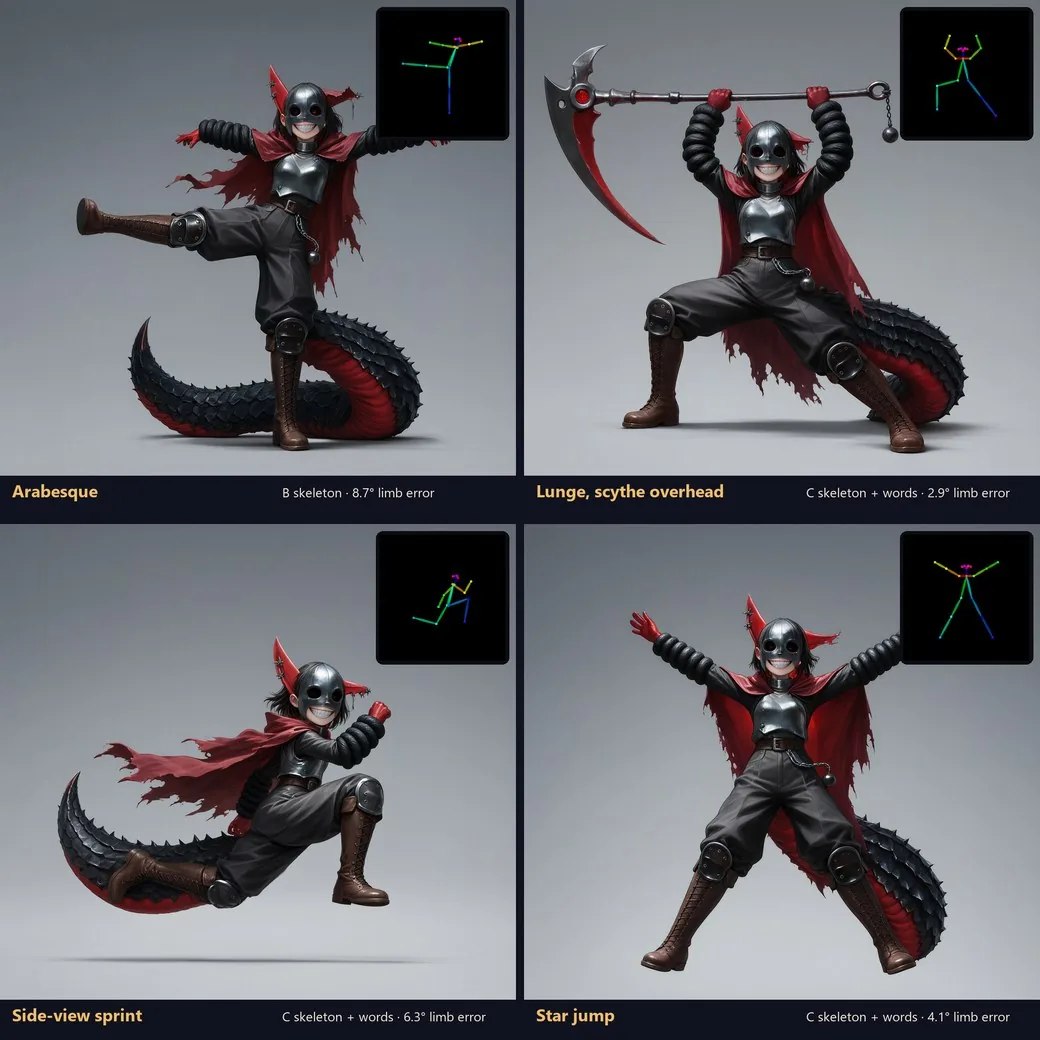
A script drew stick figures and handed each to the image model as a second picture. Stick figure plus words beat either one alone in all four poses. It has its own post.
25 seconds in one go (CNDY-036)
The video model was trained on clips of about 15 seconds. One pass held for 25. From 30 seconds up it still looked fine, but the story played twice.
A tea room you can stand inside (CNDY-035)
One picture painted as a full 360-degree sphere. Every view straight ahead reads as a room with straight walls. Straight down, the floor’s borders kink into a V that no edit fixed.
A cat that sings my song back (CNDY-034)
Neon Koi, a song Claude made for an earlier test, went into the video model as audio. The cat sings the song itself, opening its mouth for each line, though not each syllable.
From one leaf to the whole park (CNDY-033)
A maple leaf on a pond, painted outward 12 times, then flown as one zoom out to all of Ohori Park. No hard seams, but soft ghosts where the rings meet.
Eight effects on one cat, with no cuts (CNDY-032)
The video model has effects you call by name, like fire breath or bullet time. Each clip starts and ends on the same still, so eight play back to back as one shot. The orbit and the pull-back didn’t survive, since the camera has to end somewhere else. It’d make a great wallpaper.
A 16-megapixel folding screen in 75 seconds (CNDY-029)
Tabby cats act out candy’s own history on a gold-leaf screen, drawn at full size in one go, not enlarged. The composition has no seams. Up close the cats blur into each other.
Before I could leave notes
Before the notes box, I marked favourites in my library. Four AI art techniques tested on my laptop explains these three.
Candy itself started in September as one idea a morning, drawn by three image models with a Claude judge picking the best (that version). These four from back then are ones I loved.
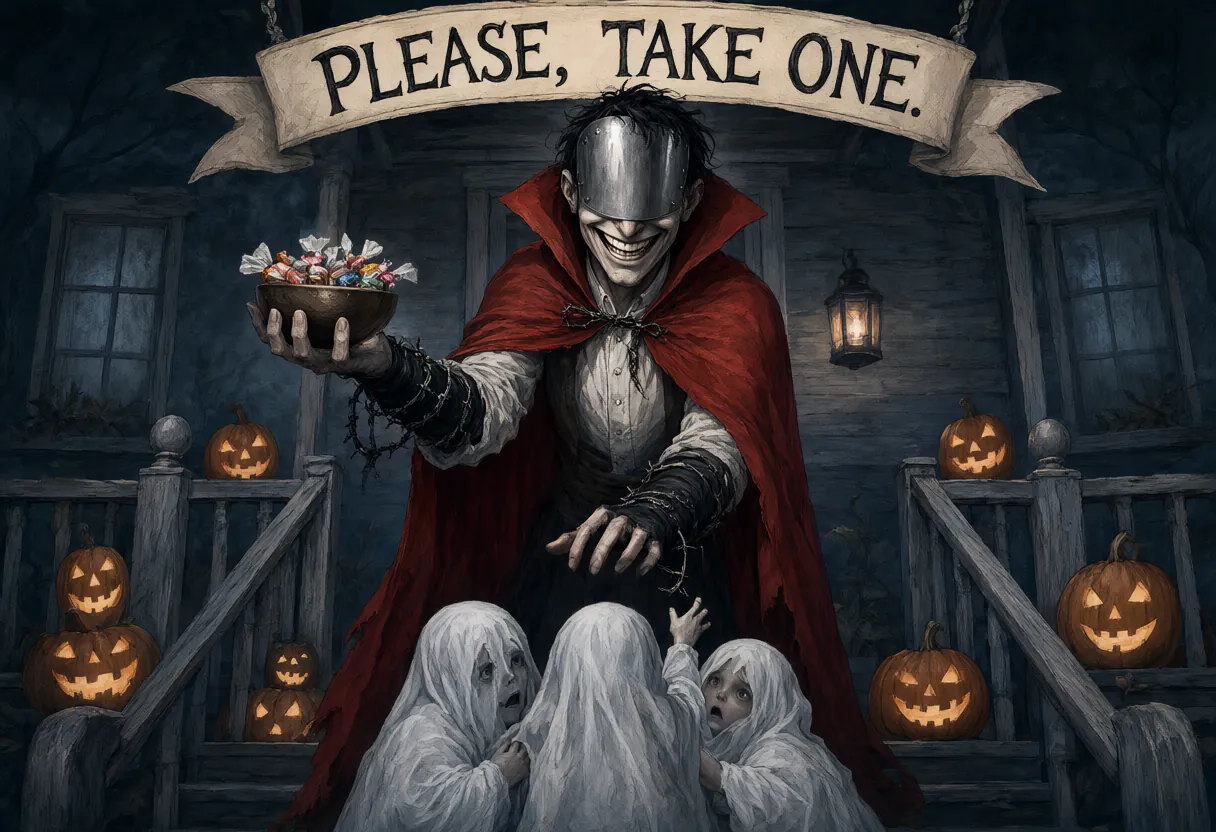

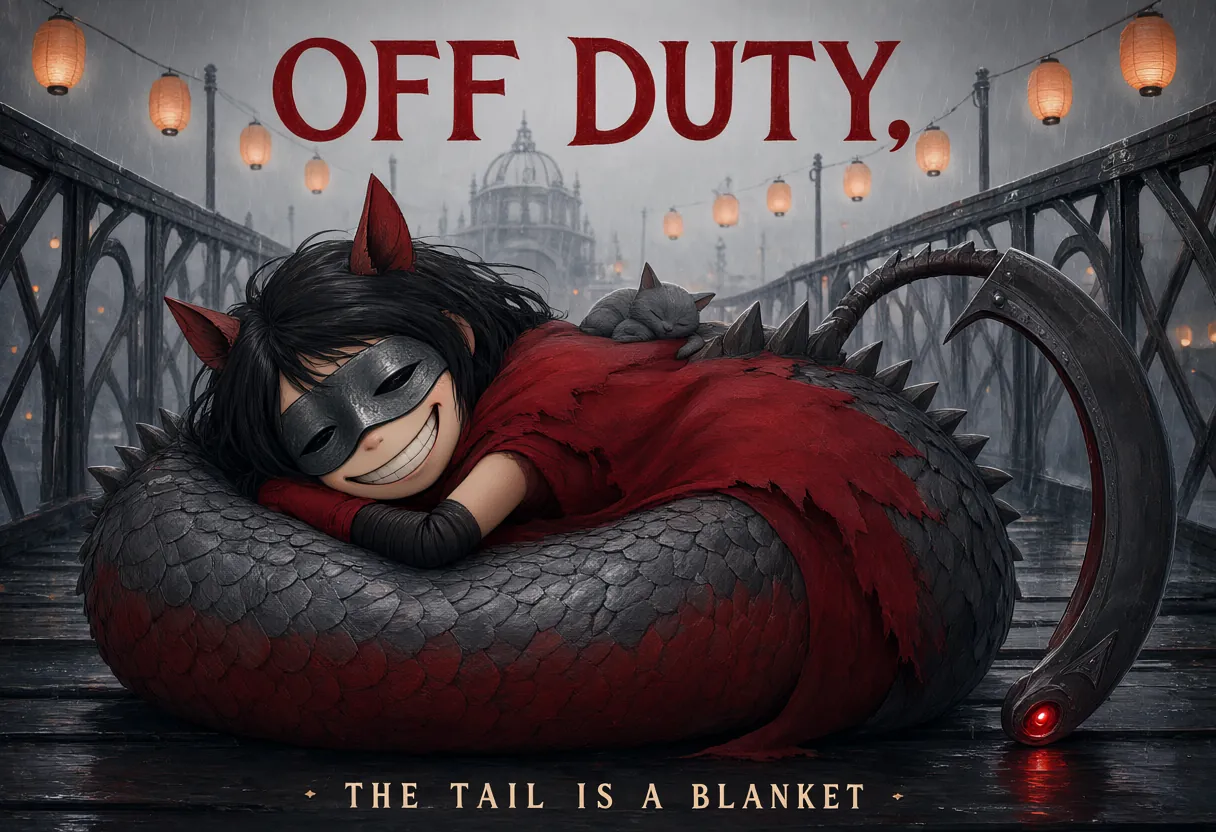
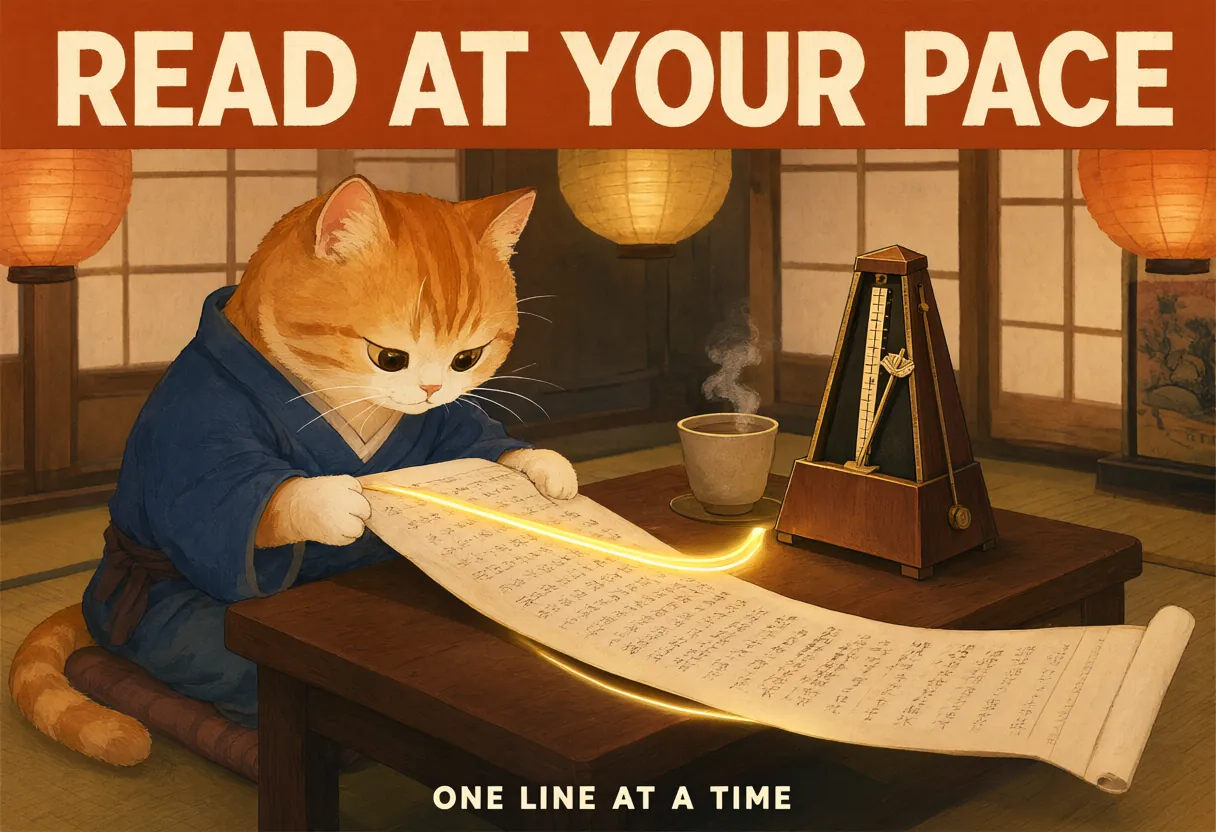
How a run works, in numbers
- Three agents per run. The clerk is a scheduled task in the Claude desktop app that fires every 10 minutes while 24/7 is on. If no run is going, it asks for the next number, starts an explorer, then a creator, and files the result: the post on my dashboard, the originals in my media library, a line in my notes.
- The first 24/7 day. CNDY-037 to CNDY-044 took 51 to 96 minutes each, about 70 on average. About half of that time was the graphics card rendering. The rest was the agents reading, planning, writing scripts and looking at what came out.
- What it uses. Across those 8 runs my weekly Claude limit went from 14% to 20%, and part of that was other sessions I ran the same day. That’s roughly half to three quarters of a point per candy.
- The rules I gave it on day one. The title names the technique. A one-sentence template I can reuse. Evidence, never a verdict. Up to four trials on different characters and pacing, with nothing the technique doesn’t need. That evening I added two more: one technique per candy, done well in about 2 to 4 hours, and no scores or measurements, because I judge by looking. CNDY-041 came before those two, which is why its page is full of numbers.
- Its own ideas too. It takes my oldest open request first, but after two runs in a row that followed requests, the next one is its own idea. I enjoy those as much. CNDY-042, a voice test I never asked for, was one.