A papercraft animation of my character, made with code
I had Claude make a six-second loop of Jefrie, my scythe-carrying character, as a folded-paper puppet, with no hand animation at all. How it works, and what six rounds of review caught.
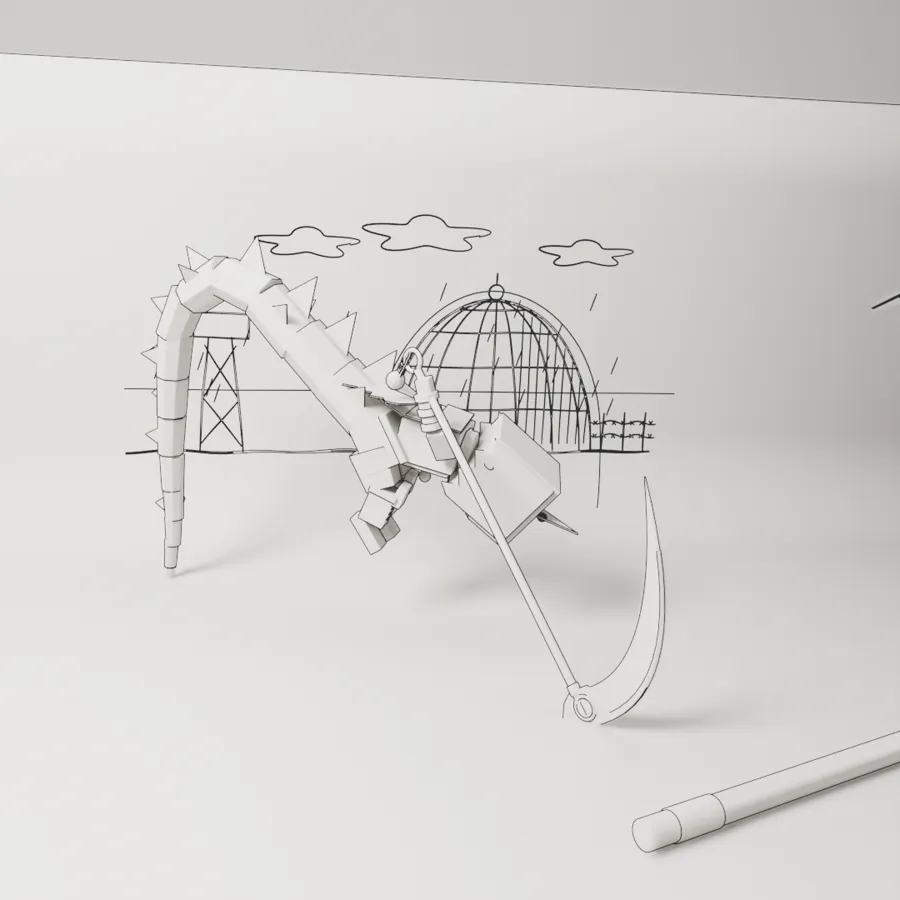
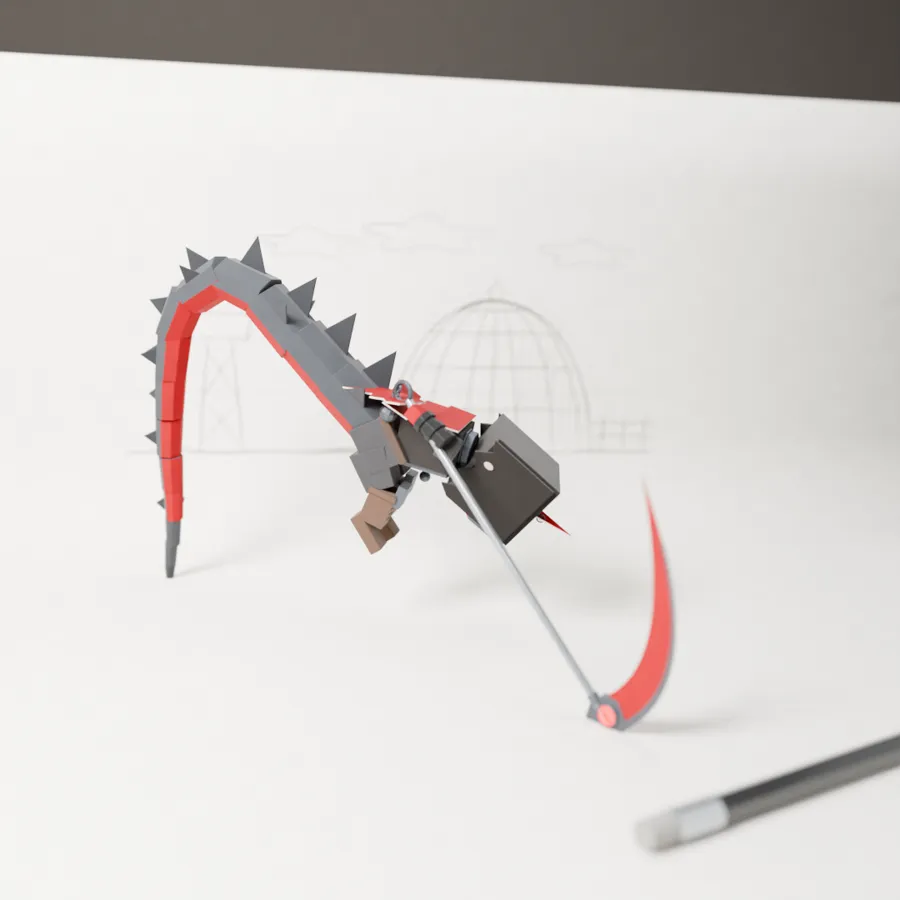
I had Claude make a six-second loop of Jefrie, my scythe-carrying character, as a folded-paper puppet on a desk. One Python script builds her and works out every move, and Blender, the free 3D program, renders it. Nothing is animated by hand. A spring swings the scythe and a weighted chain moves the tail, and that’s what makes her look light. It took about two hours, most of it review, and the fixes that mattered came from agents measuring things, not looking at them.
The tail lifts her like a puppet on strings and flings her. The scythe drags her through a full turn to cut a paper crane, then she skids and settles. The way I describe her, she’s light, and her heavy tail and scythe move her. I’d tried her in 3D before with six days of models and AI rigging tools that lost to a script. This is the first time she moved like that.
What came out of it
- The first review failed it on four counts. Weight, the spin and cut, the skid, and how clear it is as a small GIF.
- A second reviewer caught the tail tip floating about 6 cm off the paper. The builder agent had missed it by eye.
- An automated check caught the scythe handle going through her head.
- The sixth review passed it on every count. Then the method became a skill, a short how-to page an agent loads before a job.
Where the idea came from
It started with Kevin Ngo’s post on X. It’s a GIF of paper characters on a desk, “animated in Python and rendered in Blender” by Opus 5.5, a Claude model. The prompt I had Claude write asked for flat cut-paper pieces. Then Claude studied his clip frame by frame and saw folded paper boxes, so Jefrie became boxes and folded card.
One script, two jobs
paper_jefrie.py is one file of 1,869 lines. Run on its own, it works out the motion and draws
stick figures in about 10 seconds, so Claude could fix the moves without opening Blender. Inside
Blender it builds everything from nothing and renders.
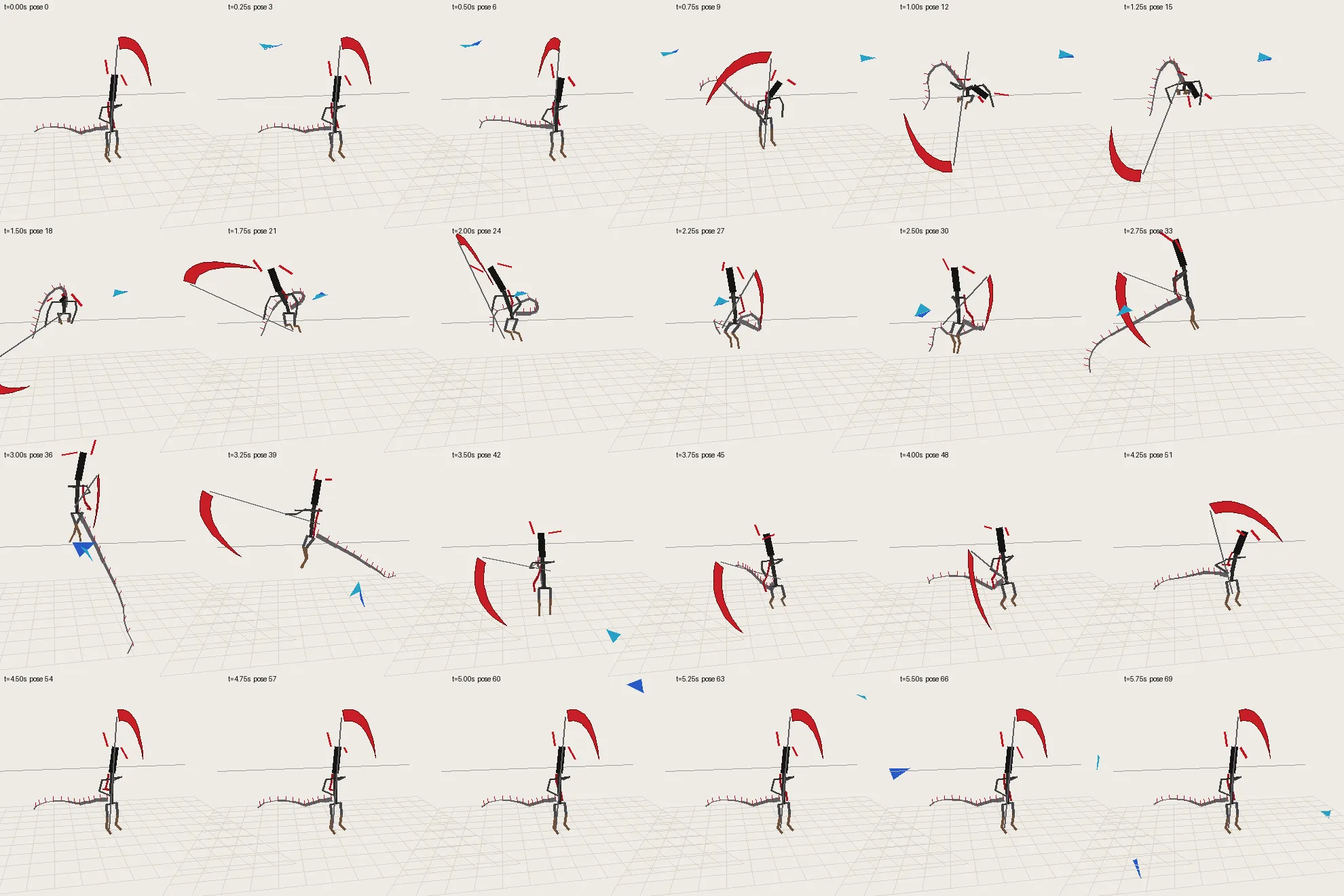
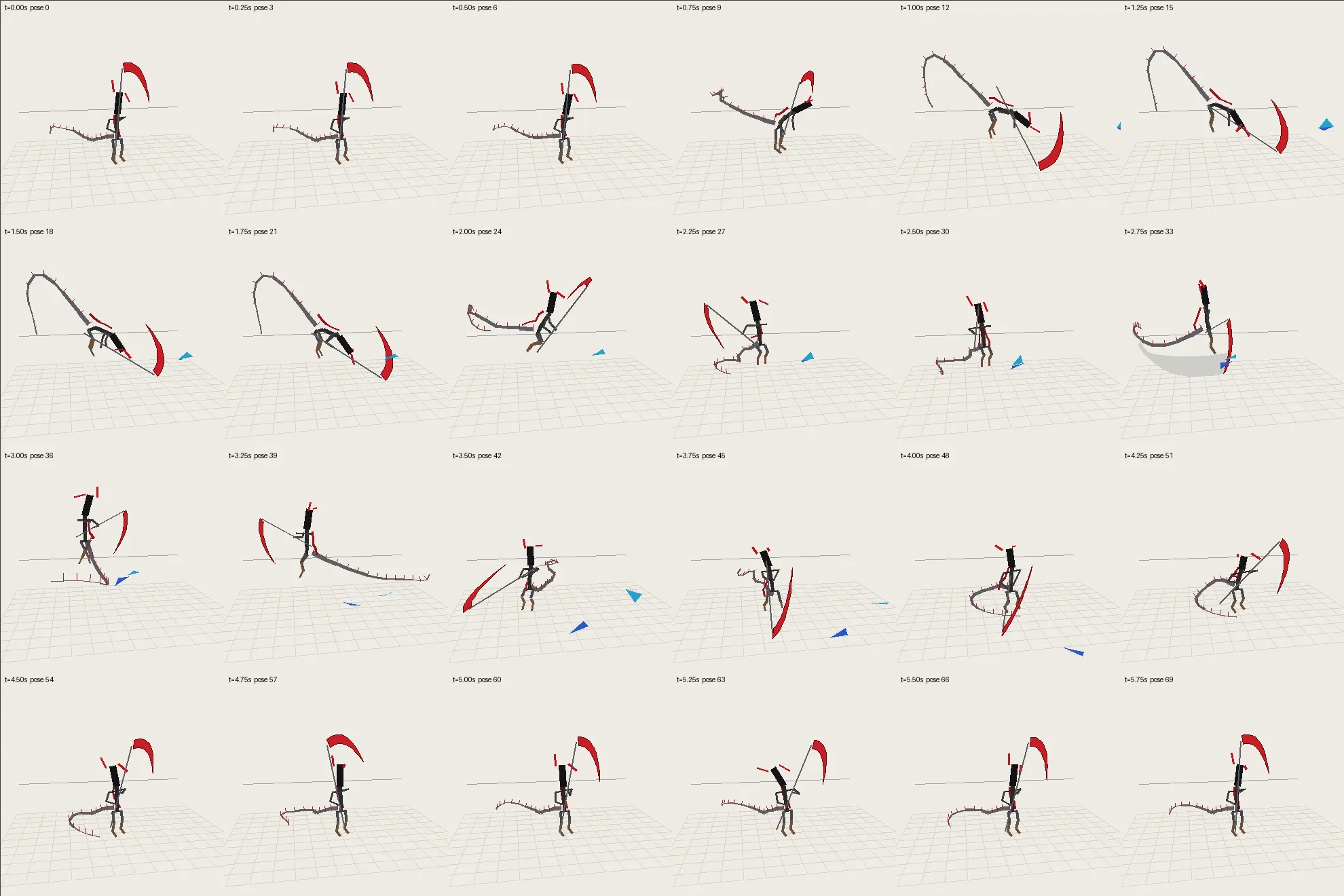
The scythe follows her hands on a spring, so it lags, overshoots and keeps swinging after she stops. The tail is a chain of 14 weighted points. Gravity is turned way down, because a 9 cm figure falling at real gravity looks like a toy.
The spring code, the tail and the crane
This is the heart of the scythe, from the script:
w0 = 2 * math.pi * freq; k = w0 * w0; c = 2 * zeta * w0
self.V += (k * (Gt - self.G) - c * self.V) * dt
self.G += self.V * dt
e = mat_rotvec(Rt_ @ self.R.T)
self.W += (k * e - c * self.W) * dt
self.R = rotvec_mat(self.W * dt) @ self.R
- The tail’s 14 points can’t pass through the paper, and it has a target shape for each part of the move: rest, arch, coil, fling, drag, plant.
- Gravity is 55 cm/s², which the script calls “puppet gravity”, so she falls the way a person would.
- The crane’s flight is worked out backwards from the cut. The script finds the pose where the blade is furthest to her front right and flies the crane in to arrive exactly there.
- Her home, an iron-bar dome, is a pencil sketch on the sheet behind her.
Six rounds of review
There were six review passes, each a sheet of 24 stills, one every quarter second. The first reviewer agent played an animation director and checked the loop against how I describe Jefrie. It passed three things, called four weak and failed four.
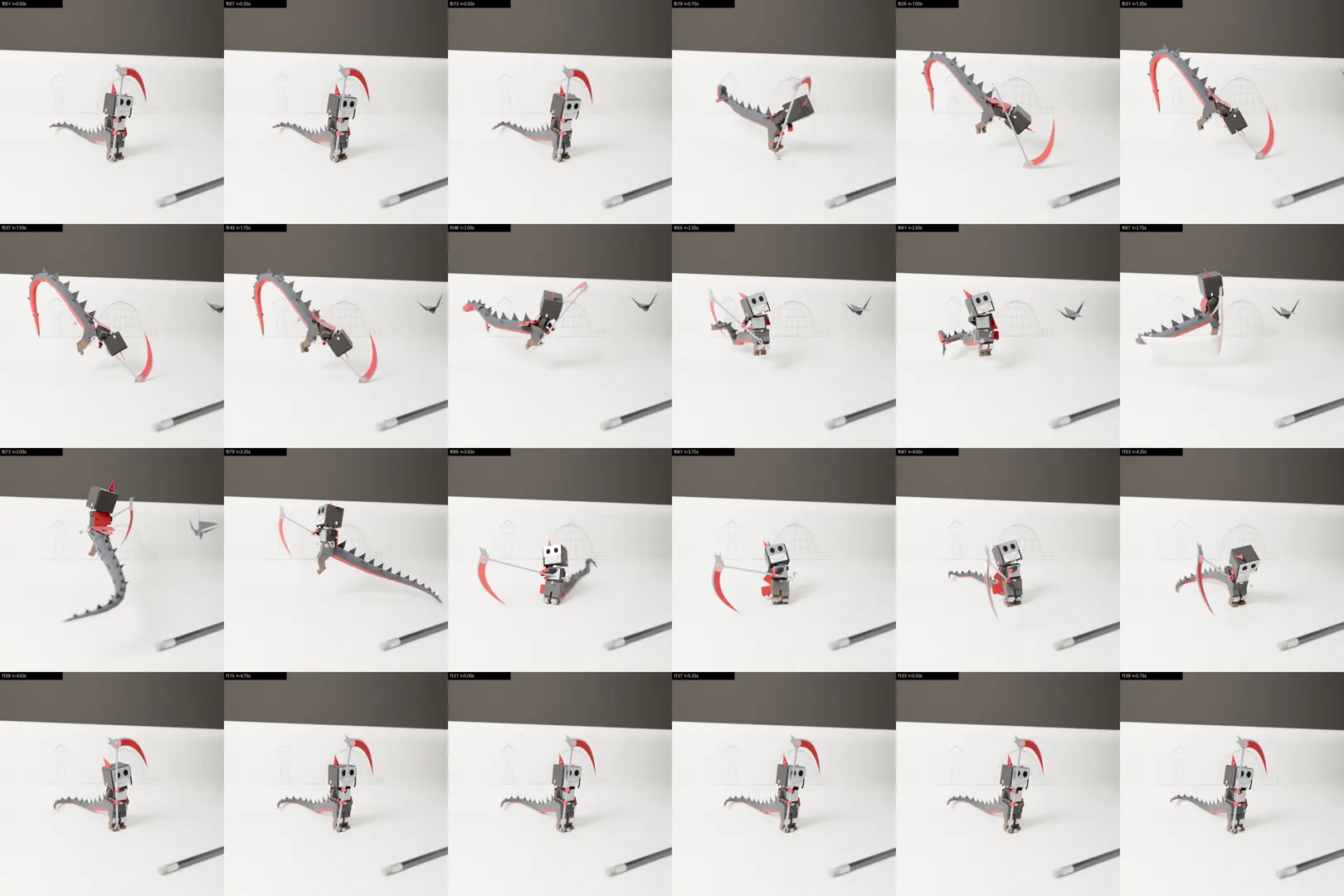
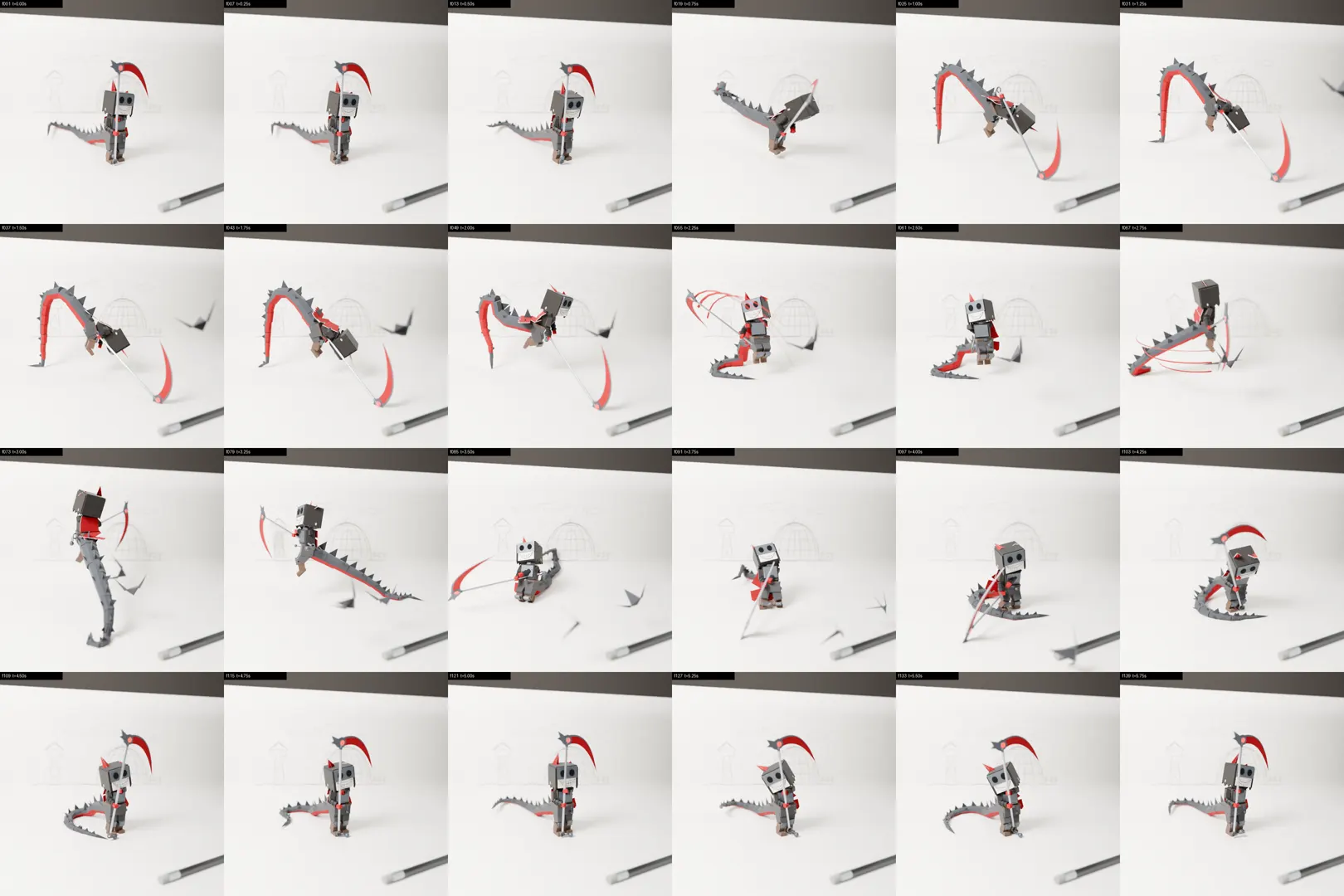
What the first reviewer said
- It took 12.5 minutes.
- Passed three things, among them the puppet-on-strings lift and the seam where the loop starts again.
- Failed: weight, the spin and cut, the skid and plant, and reading it at GIF size.
- The tail floated when it should have rested. The smear (the stretched shape that shows a fast swing) looked like a boat. The tail tip looked like a dragon’s head, and a dot for her ear read as a third eye.
- It called the arch of the lift the best image in the loop and said to protect it.
The tail tip was floating
The second reviewer ran its own copy of the motion math on pass 3. The tail tip, which should sit on the paper during the hang, floated about 5 cm up. The builder measured 5.7 to 6.2 cm, more than half her height, and wrote that the camera angle had fooled it. Pinning the end of the chain brought the tip down to under half a centimetre.

The scythe went through her head
An automated check added in the same round found something nobody had flagged. In the hang and the settle, the scythe’s handle went through her head. Now when she hangs limp, her hand slides down the handle to its end. After that the check found nothing passing through her in any of the 72 poses, and the second reviewer passed round 6 on every count.
A second loop on the same puppet
With time left, Claude reused the script for a second loop. Jefrie’s at her day job as a fast-food cashier, head on one hand. She breathes, sighs, blinks and slams her tail once. The polo and visor are the agent’s design, not mine.
Render times and file sizes
The whole build ran on the evening of 16 October, from 21:44 to 23:41, two reviewer agents included.
| Main loop | Fast-food loop | |
|---|---|---|
| Poses | 72, each held two frames (144 frames) | 60 (120 frames) |
| Final render | 250.0 s, 3.47 s a frame | 174.7 s, 2.91 s a frame |
| GIF at 720 px | 8.39 MB | 5.39 MB |
| MP4 1080p / 720p | 1.69 MB / 0.51 MB | 0.69 MB / 0.16 MB |
My laptop’s graphics card is shared between sessions through a queue, so rendering went in 25 short reservations, about 26 minutes of GPU time. The first one waited 19 minutes behind another session’s render.
It’s a skill now
I said “This is good” the next day and asked for a skill with only what an agent needs to make another one. It has the template script, the commands, the review loop and the lessons that cost extra passes.